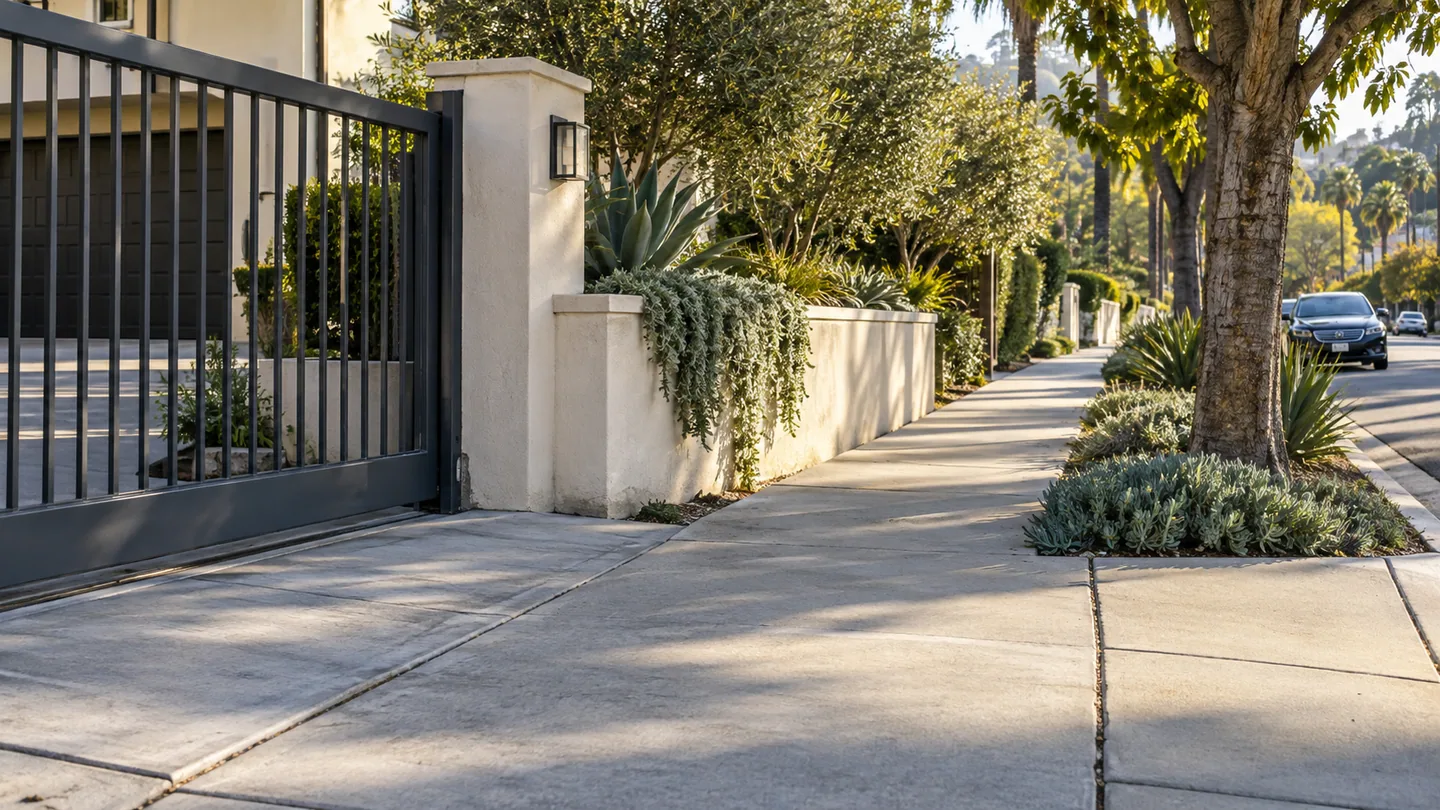
If a private improvement extends into a Los Angeles street, sidewalk, parkway, alley, or another area within the public right-of-way, an R-Permit may become part of the project. The permit is not a transfer of public property and is not automatic approval to build. It is a conditional, revocable form of permission evaluated through the applicable City process.
What does “R-Permit” mean?
“R-Permit” is the common name for a Revocable Permit. According to the current Los Angeles Bureau of Engineering Permits Manual, its purpose is to grant conditional encroachment of the public right-of-way to private parties that are not otherwise authorized to occupy that space.
An encroachment is a private object, structure, improvement, or use that occupies or projects into public space. Examples can include planters, railings, fences, architectural projections, driveway bridges, non-standard paving, private conduits, and other improvements. Whether a particular proposal belongs in the R-Permit process depends on its scope and City review.
Why is the permission conditional and revocable?
The public right-of-way exists primarily for public travel, access, infrastructure, and other public purposes. A private encroachment must remain compatible with those purposes and with the conditions placed on the permit. The City can require maintenance, insurance, waivers, removal, or other project-specific obligations.
“Revocable” matters because the permission is not the same as a permanent private property right. If permit conditions are not followed, or if the City takes action under the applicable authority, the permit may be subject to revocation. Applicants should review the actual issued permit and conditions rather than relying on a general summary.
What does the City review?
The BOE manual explains that the review process checks encroachments for compliance with City specifications involving design, use, material, and inspection. In practice, the proposal must be described clearly enough for reviewers to understand what will occupy the right-of-way, where it will sit, how it relates to existing improvements, and how public use and safety are addressed.
R-Permits are discretionary. That means a complete application does not create a right to approval. The Board of Public Works may change a Bureau of Engineering recommendation, and project circumstances can lead to added conditions, a different review path, or denial.
Why private structures are generally kept out of public space
Streets include more than the roadway. Sidewalks, parkways, and other public property bordering a public way serve pedestrian travel, vehicle movement, utilities, visibility, access, and setback functions. Private structures can interfere with those functions or make future public work more difficult.
The manual therefore states that private structures generally should not be permitted in the public right-of-way. It also recognizes that, in special circumstances, a structure may be considered where topography or constraints on private property create a hardship. A hardship is not automatic approval; it is part of the project circumstances the City may evaluate.
Neighborhood encroachment context can matter
The surrounding neighborhood is another important consideration. The official overview identifies the status of encroachments on nearby properties as a significant factor. A substantial proposal that is unlike surrounding conditions may receive closer scrutiny, and neighborhood input may be appropriate in some cases.
This is one reason a useful project record includes photographs of the frontage and adjacent conditions, not only a close-up of the proposed item.
Can a project need more than an R-Permit?
Yes. The R-Permit addresses the conditional encroachment, but construction or installation in the public right-of-way may require another permit. BOE materials refer to construction or installation permits such as an A-Permit, B-Permit, or Excavation Permit. Planning, building, structural, StreetsLA, or other reviews may also apply to certain projects.
Learn when an R-Permit may be required, review the Los Angeles R-Permit application process, and see the materials applicants may need to prepare.
Common questions
Does an R-Permit make an encroachment permanent?
No. It is revocable, conditional permission. The permittee must continue to comply with the issued conditions.
Does the R-Permit itself authorize construction?
Not necessarily. A related construction or installation permit may be required, depending on the work.
Is approval guaranteed if a similar project appears in the manual?
No. Project lists are examples. Approval remains discretionary and depends on the actual proposal and applicable City review.
Official Source
R-Permits.com is an independent informational and permit-support website, not the City of Los Angeles. This article is general information and does not guarantee eligibility, approval, fees, conditions, or processing time. Verify current requirements with the applicable City agency.
Related articles
Have a Los Angeles project involving the public right-of-way?
Independent R-Permit support services can help organize the project facts and preparation questions.
Discuss Your R-Permit Project View All Resources